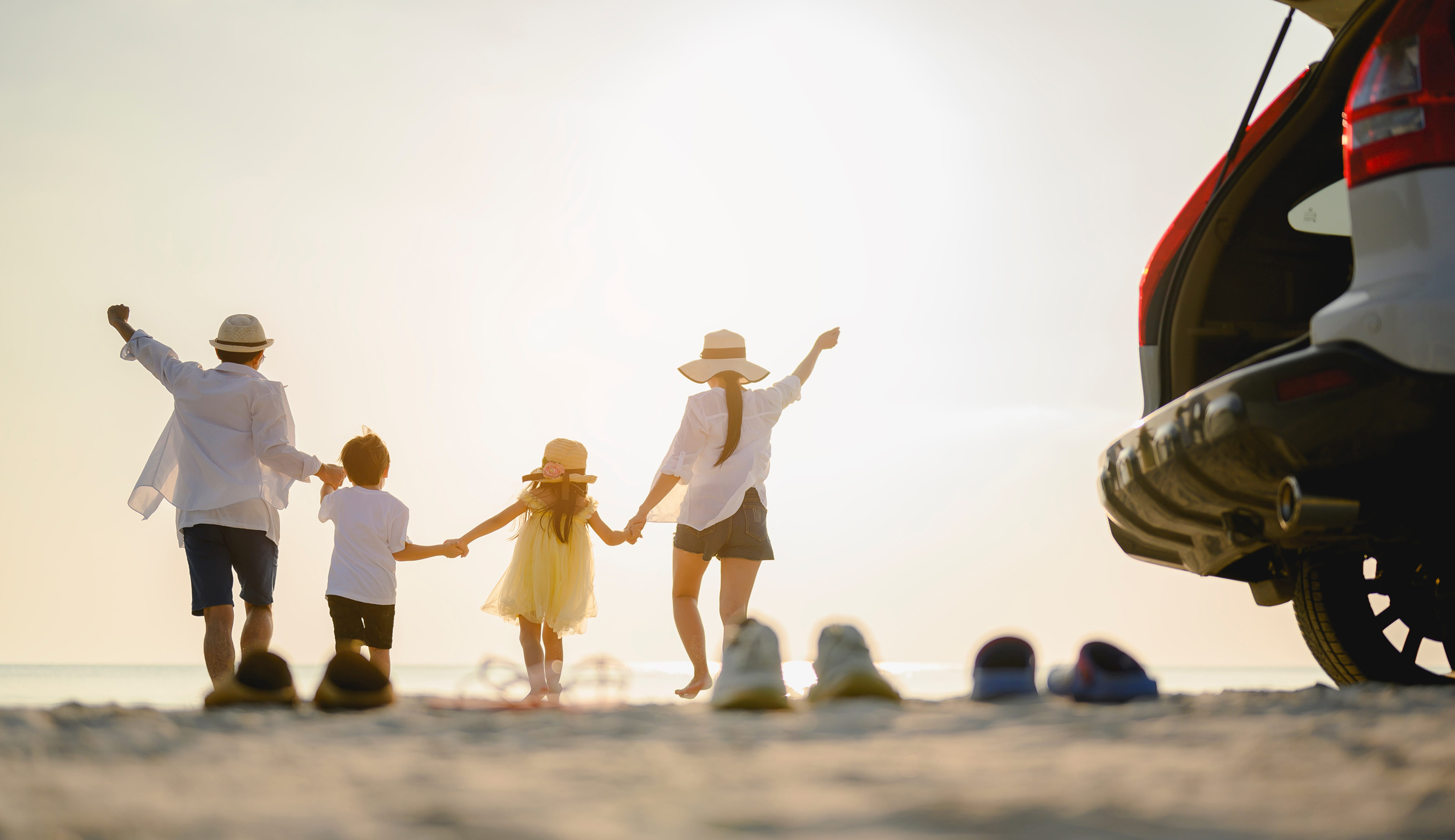
A Florida road trip anchored to the coast isn’t just a drive. It’s a geography lesson in contrast, with mangrove tunnels giving way to open Gulf light, Atlantic swells swapping places with Panhandle calm, the landscape continuously rewriting itself over some 1,300 miles of shoreline.
Miami-Dade has some of the best beaches in the state: Bill Baggs Cape Florida State Park, Miami Beach, Surfside, Sunny Isles, the list goes on and on. But just a short drive from Miami is one of the most family-friendly and exciting beaches in South Florida: Hollywood Beach. Its famous two-and-a-half-mile promenade runs straight along the Atlantic, with the entire beach town buzzing with cyclists threading between families on cruisers, the scent of sunscreen, taste of fresh-cut fruit and the sounds of birds banking low over breaks that roll in clean and consistent. The sand is wide and the water is warm and the whole scene has an energy that is not only something to write home about, it’s a postcard vibe.
Continuing north, Delray Beach features a downtown compact enough to walk in flip-flops with a city beach that earns its reputation for good reason. Atlantic Avenue spills toward the water with ice cream in hand, and the surf breaks cleanly along a stretch of coast that manages to feel festive without sliding into chaos. Families tend to anchor here for half a day, watching pelicans draft the breakers while the kids test the tides.

The drive across the state to the Gulf Coast is its own reward. Take Alligator Alley and the world narrows to water and sky, with the occasional hawk gliding above the sawgrass. Families who have spent the morning on an Atlantic beach and the afternoon watching alligators sun on a bank are experiencing Florida at full range.
Naples welcomes visitors with a certain unhurried elegance. The city pier extends nearly a thousand feet over brilliant green water and functions as the social center of the beach, where couples fish, families photograph sunsets and toddlers watch sea birds congregate at the railings with the confidence of regulars. Naples Beach itself is fine white sand compacted firmly enough for easy walking, the Gulf arriving in gentle rollers suited to small swimmers. Sunset here is a practiced ceremony, the sky turning amber and coral across water that has the patience to stay perfectly flat.
The drive north traces a coastline that keeps outdoing itself. Sanibel Island is a genuine shell hunter’s destination. The island’s east-west orientation causes shells to pile on shore in quantities that stop people cold mid-walk. Blind Pass Beach on the northern end draws the serious collectors, while Bowman’s Beach offers shade from the Australian pines and wilder, less-visited stretches of sand. The J.N. “Ding” Darling National Wildlife Refuge cuts across the interior, its Wildlife Drive navigable by car or bike and lined with sightings of exotic roseate spoonbills that look too vibrant to be real.

Fort Myers Beach, just over the Matanzas Bridge, trades Sanibel’s calm currents for genuine beachfront energy. The shrimp boats still work out of the harbor, and Times Square at the northern tip of Estero Island operates on beach-town time. The bars and boardwalk and sugar sand all run together in a way families and sun-seekers have embraced for generations.
Next comes Clearwater, and here the Gulf Coast reaches its peak. The water is an improbable blue-green, the sand is white and powdery enough to squeak underfoot, and the beach is wide, long and sunny. Pier 60 anchors the action each evening with its famous sunset festival, street performers and artisan vendors gathering as the sky transitions through its most convincing colors.
The Panhandle push north of Tampa leads toward a coast that operates by different rules. The beaches of Grayton Beach State Park and Seaside carry the authority of places that have refused to be overdeveloped. The dunes are high and vegetated, the waters clear, shallow and a specific shade of aquamarine that photographs with a natural filter that looks just as impressive in person as it does in your camera roll. Families who make it this far tend to stay longer than planned.

The return south cuts back through the peninsula’s interior…through Gainesville and Ocala, past the horse farms and Florida Springs that define a version of Florida the beach towns have no idea exists. Crystal River is worth a detour: the springs feed a river system where wild manatees aggregate in winter, approachable by canoe or kayak. The water is 72 degrees year-round, and the manatees are unhurried in the way only large mammals who have never had a predator can be.
The trip is bookended by the skyline, but the distance between departure and return is measured in sand types, water colors, and the specific quality of light at 6 p.m. on a pier with your shoes off. Florida gives generously to anyone willing to look past the obvious. The road back to Miami is the last good reminder that we live in the best state for seaside adventures and the best is just on the horizon; VisitFlorida.com.